
Winters in Rockford damage equipment and roads due to freeze–thaw cycles and salt. Salt prevents ice but speeds up corrosion, affecting wheel alignment, suspension, and costs. Fleet owners must understand winter impacts to protect tires, boost fuel efficiency, and ensure safety.
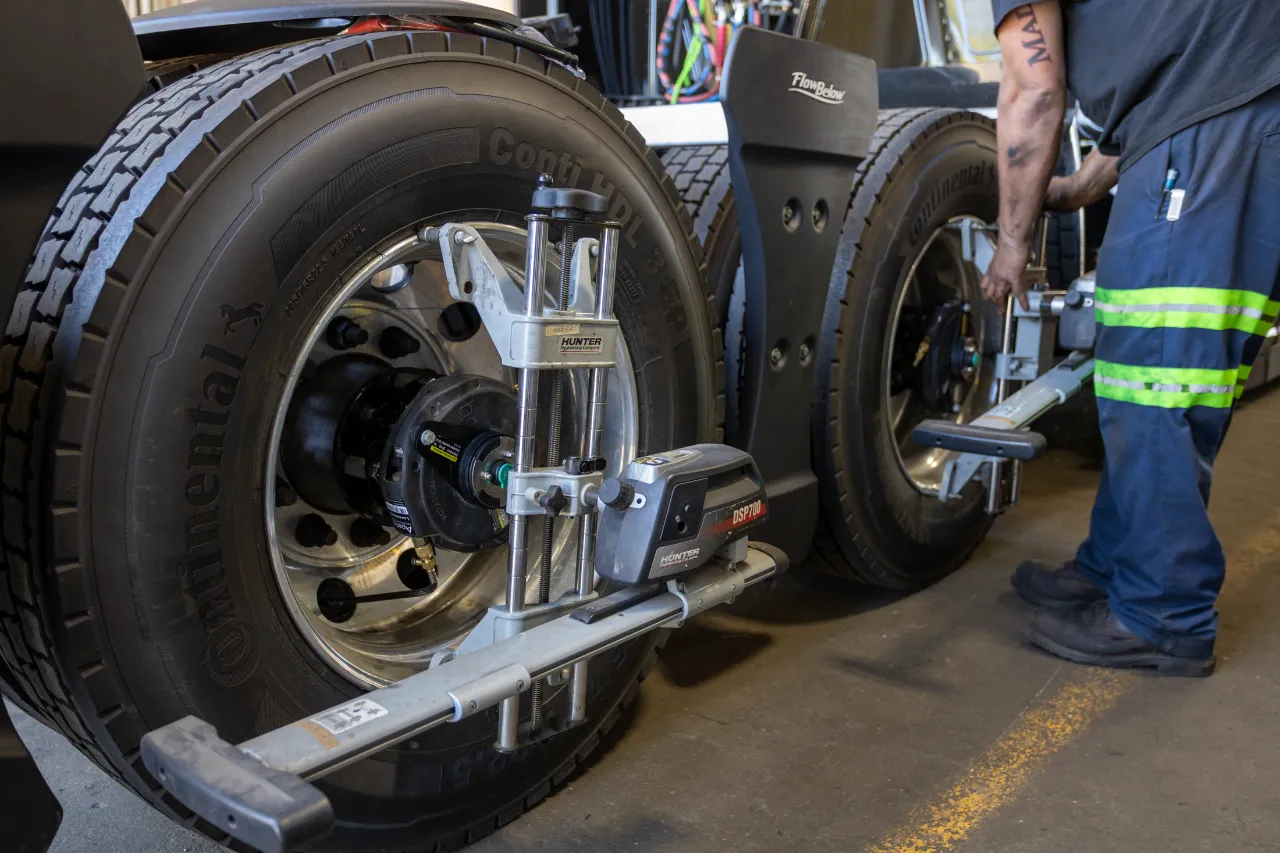
Winters in Rockford are tough not only on drivers but also on equipment. Repeated freeze–thaw cycles create potholes, while heavy use of road salt keeps highways safe but accelerates corrosion on every passing truck. Illinois and other cold-weather states rely heavily on de-icing salt to ensure winter road safety because it prevents ice from bonding to pavement and reduces collision risk. However, this combination of damaged pavement and salt-laden slush directly affects wheel alignment, suspension durability, and long-term operating costs.
For owners and fleet managers in Rockford, IL, understanding how winter conditions affect heavy-duty wheel alignment is crucial to protecting tires, improving fuel efficiency, and enhancing overall vehicle safety.
How Rockford Winters Disrupts Wheel Alignment
In a typical Rockford winter, moisture seeps into small cracks in the pavement, freezes, expands, and causes the surface to break apart. This process creates the potholes and uneven patches that heavy trucks face on interstates, secondary highways, and local roads. State and regional agencies widely acknowledge that freeze–thaw cycles and de-icing practices are key drivers of pavement damage.
When a loaded tractor–trailer or diesel work truck strikes these defects at high speed, the impact is transmitted through the steering linkage, suspension, and axles. Modern heavy-vehicle suspension systems are designed to absorb road shock and keep the wheels properly aligned, but repeated severe impacts can gradually alter the suspension geometry they are meant to support.
Consequently, chronic winter potholes can:
- Bend or stress tie rods, drag links, and other steering parts.
- Slightly misalign the axle on multi-axle trucks.
- Accelerated wear of suspension bushings and joints causes additional movement, which affects truck wheel alignment.
Even minor deviations matter. Industry guidance for heavy-duty vehicles notes that misalignment, even by a few tenths of a degree, can significantly increase tire scrub and rolling resistance, resulting in measurable increases in operating costs.
Road Salt and Corrosion of Steering and Suspension Components
While potholes physically displace components, road salt chemically damages them. Rock salt and brine accelerate the reaction between moisture and exposed metal, accelerating rust formation on the chassis and underbody. For trucks and trailers, studies and industry reports consistently highlight that the undercarriage is especially vulnerable, including frames, brake lines, fuel lines, and suspension parts.
Salt-covered slush and spray tend to build up on:
- Leaf spring hangers, shackles, and equalizers.
- Control arms and related components bushings.
- Steering linkage joints, alignment cams, and adjusters.
- Crossmembers and mounting brackets that hold axles and suspension modules.
As corrosion advances, various alignment-related issues may arise:
- Road salt corrosion can seize alignment adjusters and cams, making accurate wheel alignment more difficult or impossible until those parts are replaced.
- Rust can weaken the structural thickness of brackets and mounts, leading to unwanted movement under load that alters alignment angles.
- Worn bushings and joints can add looseness, leading to wheels toeing in or out while driving.
In other words, road salt corrosion is not just cosmetic; it directly impacts the reliability of the steering and suspension systems that keep your vehicle aligned and safe to handle.
What Misalignment Does to Tires, Fuel, and Safety
Heavy-duty shops and fleet specialists consistently recognize proper heavy-duty wheel alignment as one of the most valuable maintenance services. Correct alignment minimizes uneven tire wear, reduces rolling resistance, and safeguards suspension and driveline components. On the other hand, misalignment has several well-known effects:
- Accelerated and irregular tire wear: Misaligned axles or steer wheels cause specific areas of the tread to bear more load, resulting in feathering, cupping, or quick shoulder wear.
- Reduced fuel efficiency: When wheels are not parallel and properly aligned, the tires scrub against the pavement, increasing drag and forcing the engine to work harder to maintain speed. Industry sources confirm that poor alignment can significantly raise fuel consumption.
- Handling and safety concerns: Misalignment causes steering pull, wandering, and instability, especially at highway speeds. These issues are often listed as alignment-related safety risks for heavy vehicles.
From a cost perspective, tire manufacturers and fleet maintenance providers note that maintaining proper alignment extends tire lifespan and reduces replacement needs, thereby lowering total ownership costs. For Rockford-based fleets with high annual mileage, this becomes a significant budget factor.
Post-Winter Symptoms That Indicate Alignment Problems
After a harsh winter, it is wise for drivers and maintenance staff to carefully inspect for signs that wheel alignment is out of specification. Leading heavy-duty repair resources and alignment specialists emphasize a consistent set of warning indicators.
- A steering wheel that is off-center when the vehicle is going straight.
- Noticeable pull to one side on a level highway with no significant crosswinds.
- Vibration in the steering wheel at specific speeds, particularly when the tires are otherwise in good shape.
- Irregular or localized steer tire wear, such as feathered ribs, cupped sections, or accelerated shoulder wear.
- A feeling of “wander” or looseness that needs constant adjustment to stay in the lane.
These symptoms indicate that a professional suspension inspection and alignment check are necessary, primarily if the vehicle has been driven extensively on salted and damaged winter roads.
Why Spring Is the Ideal Time for Alignment and Corrosion Control
Preventive maintenance programs for heavy-duty trucks consistently focus on scheduled inspections and services to reduce breakdowns, improve safety, and lower overall operating costs. Key tasks usually include oil and filter changes, brake inspections, tire checks, and, when suitable, suspension inspections and alignments.
Spring is an especially strategic time to implement preventive maintenance and alignment work for Rockford-based trucks because:
- Winter has already exposed underbodies to months of salt and moisture.
- Pavement damage and potholes have reached their worst, so the major alignment issues have already taken place.
- Any developing steer tire wear patterns are likely to be visible and can aid in diagnosis.
Scheduling a thorough spring service that includes truck wheel alignment helps fleets stabilize tire wear for the rest of the year and lowers the risk of handling problems during high-mileage summer operations. This strategy aligns with industry guidance that considers preventive maintenance essential for reliability, fuel efficiency, and safety.
A Practical Post-Winter Maintenance Checklist
To put these principles into practice, many operators find it helpful to implement a repeatable post-winter checklist. Based on best practices in corrosion control, suspension care, and alignment management, a formal spring procedure may include the following steps:
- Thorough undercarriage wash: Professional underbody cleaning removes salt deposits from frames, suspension brackets, and wheel ends. Experts say regular salt removal reduces early rust and prevents structural weakening.
- Detailed suspension and steering inspection: Technicians should inspect leaf springs, air-ride parts, bushings, shocks, steering linkage, and mounts for corrosion, deformation, or play. Industry guidance emphasizes that the suspension absorbs road shock, maintains alignment, and ensures safe handling under various loads. Heavily corroded or worn components should be replaced before alignment.
- Tire condition and wear pattern review: Regular tire inspections are essential for the maintenance of heavy diesel vehicles. Experts recommend checking for uneven wear, proper inflation, and fixing alignment issues to prevent blowouts and boost fuel efficiency. Irregular steer tire wear patterns can indicate specific misalignments.
- Precision wheel alignment service: After addressing structural and wear issues, have a professional perform a heavy-duty wheel alignment using equipment that measures toe, camber, caster, and thrust angles. Experts say accurate alignment reduces uneven tire wear, lowers rolling resistance, and improves stability, saving on tires and fuel.
- Documentation and alignment-interval planning: For fleets, identifying units that require larger or more frequent adjustments can inform future winter maintenance. Preventive guidelines recommend structured schedules and records to extend vehicle life and reduce downtime.
By treating truck wheel alignment and corrosion control as routine maintenance rather than reactive repairs, Rockford operators can better manage the long-term effects of winter conditions.
Why This Matters Specifically for Rockford-Area Operations
Rockford-based fleets operate on a challenging corridor that includes I-39, I-90, and regional routes leading to Chicago, Madison, and beyond. Data from the Chicago area highlight the extent of road salt use in northern Illinois; in recent years, the city has applied hundreds of thousands of tons of salt during a single winter season, emphasizing how regularly vehicles in this region are exposed to chlorides.
For trucks operating daily routes through this environment, the combined effects of salt exposure, repeated freeze–thaw cycles, and heavy traffic underscore the importance of winter truck maintenance and alignment management. Failing to address the resulting corrosion and misalignment can increase costs by shortening tire life, raising fuel consumption, and heightening the risk of safety-critical component failures.
How Meiborg Enterprises Supports Post-Winter Alignment and Maintenance
Local expertise is essential for properly aligning and maintaining trucks operating in Rockford’s specific conditions. Meiborg Enterprises is a heavy-duty truck repair and fleet service provider based in Rockford, Illinois, offering comprehensive diesel repair, wheel alignment, suspension repair, and preventive maintenance programs for Class 7–8 trucks and fleets.
Because Meiborg’s team works daily with vehicles that operate on the same salted highways, city streets, and industrial routes as local operators, they are well-equipped to identify winter-related issues such as road salt corrosion, suspension wear, and misalignment early on. Their services include fleet-focused maintenance and alignment support designed to keep trucks safe and compliant while reducing downtime.
Taking Action After a Harsh Season
In summary, Rockford winters result in unavoidable exposure to potholes and salt, both of which directly affect wheel alignment, suspension integrity, and long-term operating costs. Current industry research and fleet experience indicate that incorporating alignment checks, undercarriage cleaning, and targeted suspension inspections into a spring preventive maintenance program is among the most effective ways to reduce these risks.
For owner-operators and fleet managers in Rockford, IL, scheduling a post-winter alignment and corrosion-focused inspection with a qualified provider like Meiborg Enterprises is a smart step toward protecting tire investments, boosting fuel efficiency, and keeping safe, predictable handling for the rest of the year.
News & Articles
Find regular articles covering a wide range of topics related to diesel repair, maintenance, and troubleshooting.

Don't Take our word for it.
Read Customer Testimonials.
"Great experience with Meiborg! I am and will continue to be a loyal customer. Thanks Tyler and the whole team for getting my truck back up and running."
"Awesome team to work with, these guys took great care of me, fair prices too."
"Excellent group of guys that delivers on their promises with accurate diagnostics and complete repairs."
Contact Us
Let us know what is going on with your vehicle, and we will get back to you soon with a quote.